Developmental Consultations
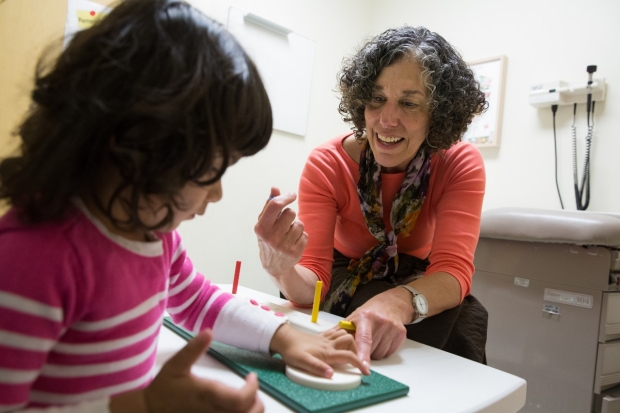
This service offers assistance to a family or health care provider who has questions about a child’s development or behavior. The program evaluates the child’s skills in a wide range of developmental areas. As part of the evaluation, families are asked to complete a developmental questionnaire. The information from the questionnaire is integrated with medical evaluations and developmental and behavioral assessments to prepare detailed reports for the family and health care team. These reports provide recommendations and referrals for community-based services. We may also follow-up to monitor the child’s progress and update recommendations.
Young Childhood Program
The Young Childhood Program takes a holistic approach to evaluating children, birth through kindergarten level, in a wide range of developmental and behavioral areas. We take an interdisciplinary approach, integrating healthcare information with developmental assessments, social assessments, and environmental assessments. We assess children for delayed language or motor skills. We evaluate children whose parents or team are concerned about autism . We also assess children who have challenges with sleeping, eating, behavior, discipline, or temperament.
Middle Childhood Program
The Middle Childhood Program takes a holistic approach to assessing children in elementary and middle school in terms of developmental strengths and weaknesses, learning progress, and social and emotional adjustment in school, community, and family. Many evaluations require two separate visits. We often ask parents to come alone so that they can express their concerns without the child being present. We evaluate children with weak attention, problems with learning or intellectual anxiety, autism, tic disorders including Tourette syndrome, and those with anxiety, mood, or disruptive and aggressive behaviors.
Continuity Ongoing Care Program
The Continuity Ongoing Care Program is led by DBP fellows (senior subspecialty trainees with attending supervision) and includes visits for conducts developmental monitoring follow-up assessments and medical management for children with ongoing developmental or behavioral needs. Children who are seen in this program often receive a prior evaluation in our YoungEarly Childhood Program, Middle Childhood Program, or Infant Development Specialty High-Risk Infant Follow-up Program. We ; however, we also welcome first-time patients that may have been evaluated elsewhere. We monitor progress and adjust our plan based on changes we see in the child. We help the family to coordinate resources and services, interpret individual education and family service plans, and make referrals to outside resources for additional counseling or therapy.